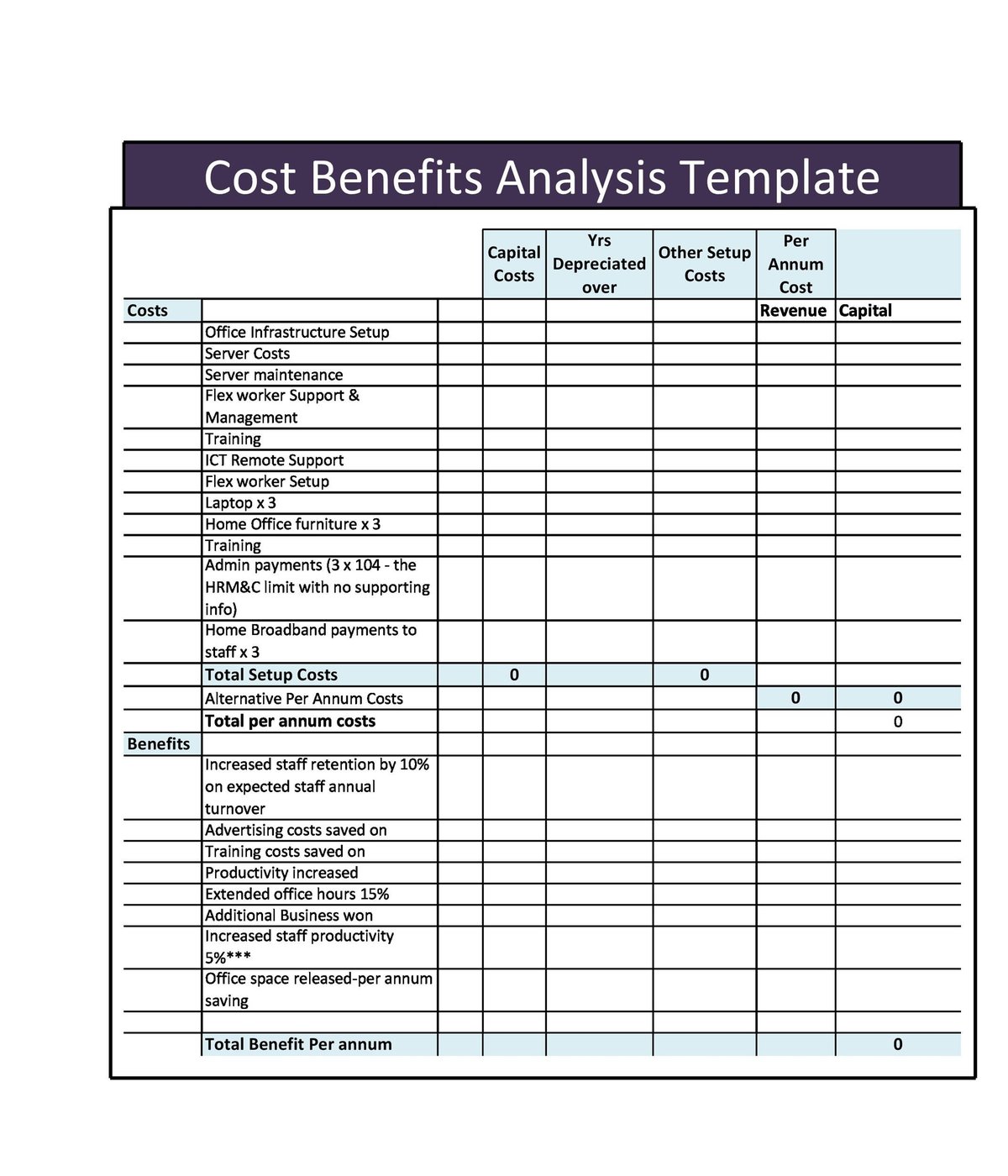
Imagine you're standing at a crossroads, pondering a significant financial decision. Maybe it's a new subscription service, a major home renovation, or even upgrading your business's entire IT infrastructure. In each scenario, you're faced with an upfront "premium"—a cost, an investment, an ongoing payment—and the tantalizing promise of "potential savings" or future gains. The core question always boils down to one thing: Is it worth it? This is precisely where a robust Cost-Benefit Analysis (CBA) shines, helping you cut through the noise to compare those premiums against their long-term value.
It's more than just simple math; it's a structured, systematic way to evaluate the tangible and intangible trade-offs of any choice before you commit. You wouldn't buy a car without checking its mileage and maintenance history, so why would you make critical life or business decisions without a similar deep dive?
At a Glance: Your CBA Cheat Sheet
- What it is: A structured way to weigh the pros (benefits) and cons (costs) of a decision.
- Why it matters: Helps you make informed choices, optimize value, reduce waste, and align decisions with your goals.
- The core idea: Convert all costs and benefits into monetary terms to see if benefits truly outweigh costs.
- Key steps: Define your project, identify all costs and benefits, assign a dollar value to everything, compare the totals, and then make your call.
- Not just money: It includes less obvious costs (like missed opportunities) and intangible benefits (like improved morale).
- The ultimate goal: Determine if the "premium" you're paying or the investment you're making will genuinely lead to worthwhile "potential savings" or gains.
What's the Real Deal with Cost-Benefit Analysis?
Think of Cost-Benefit Analysis (CBA) as your ultimate decision-making superpower. At its heart, CBA is a systematic way to lay out all the advantages and disadvantages of a project, decision, or investment before you even take the first step. It's about determining, with as much clarity as possible, if the good things that come from an action truly justify the bad things—the costs—that you have to incur.
For individuals, this could be deciding if a higher premium for comprehensive car insurance is worth the potential savings on repairs after an accident. For businesses, it might mean evaluating whether investing in a new energy-efficient production line (the premium) will yield substantial savings on utility bills and maintenance over its lifespan. The overarching goal is simple: to make the most advantageous choice, reduce waste, and ensure your decisions are aligned with your long-term goals.
How does it achieve this? By taking everything—from the direct cash outlay to hard-to-quantify impacts like employee morale or brand reputation—and trying to put a monetary value on it. This way, you get an apples-to-apples comparison, allowing you to weigh potential outcomes and assess the financial viability of your choices with confidence.
Diving Deep: The Core Components of a Solid CBA
A robust CBA isn't just a back-of-the-envelope calculation; it's a comprehensive exercise built on several key pillars. Missing any one of these can skew your results and lead to flawed decisions.
- Project Scope: Drawing Clear Lines
Before anything else, you need to know exactly what you're analyzing. What's the specific project? What are its goals? What outcomes do you expect? Are you looking at a five-year horizon or just the next quarter? Clearly defining these boundaries ensures you don't over-complicate the analysis or miss critical elements. - Costs: Uncovering Every Expense
This isn't just about the obvious price tag. You need to dig deep into all the potential negative impacts. We're talking about direct financial outlays, sure, but also indirect expenses, the value of opportunities you might miss by choosing this path, and those tricky intangible costs that don't have a direct invoice. - Benefits: Spotting Every Advantage
On the flip side, what positive impacts can you expect? Again, look beyond the immediate financial gains. Consider measurable increases in revenue, but also indirect perks like improved customer loyalty, intangible boosts like enhanced productivity, and long-term advantages that accumulate over time. - Monetary Valuation: The Universal Translator
This is where the magic happens. To compare apples and oranges, you need to turn them all into dollars. Every identified cost and benefit, no matter how abstract, needs a monetary value assigned to it. This allows for a direct, quantitative comparison that forms the backbone of your analysis. - Comparison and Evaluation: Crunching the Numbers
Once everything has a price, you can compare total costs against total benefits. Using various financial metrics, you'll determine if the benefits genuinely outweigh the costs. This is where you assess financial viability and decide whether your investment (the "premium") is likely to deliver on its promise of "potential savings" or significant returns.
Your Step-by-Step Guide to a Savvy Cost-Benefit Analysis
Ready to put theory into practice? Here's how to conduct a thorough CBA that gives you actionable insights.
1. Frame Your Decision: Setting the Stage
Before you open your spreadsheet, get clear on what you're actually doing.
- Define the "What": Is it buying new software, relocating an office, or launching a new product? Be specific. What are its exact objectives?
- Set the Boundaries: What's the timeframe for this analysis? Which departments or resources are involved?
- Identify Stakeholders & Data: Who needs to be involved in this decision, and where will you get the crucial financial, operational, and market data you'll need?
2. Unpacking the Ledger: Identifying Costs
This is where you list every single negative impact or expense associated with your decision. No stone unturned!
- Direct Costs: These are the obvious ones—the upfront cash outlays. Think equipment purchases, materials, labor, training, building leases, marketing campaigns. If you have an invoice for it, it's a direct cost.
- Indirect Costs: Not directly tied to the project but still a consequence. Examples include increased utility bills, administrative support salaries, insurance premiums that might rise, or increased cybersecurity measures.
- Opportunity Costs: This is crucial and often overlooked. What potential gains are you missing out on by choosing this particular project over another? If you invest in Project A, you might be delaying or foregoing Project B, which could have offered different sales increases or market opportunities.
- Intangible Costs: These are harder to quantify but no less real. Consider potential negative impacts on employee morale, brand reputation damage, environmental harm, or increased stress on existing teams. Assigning a value here might require careful estimation or even surveys.
3. Counting Your Wins: Identifying Benefits
Now for the good stuff. List all the positive outcomes and gains from your decision.
- Direct Benefits: Tangible and measurable wins, like increased sales revenue, reduced operational expenses, lower supply costs, or direct cash inflows.
- Indirect Benefits: Positive ripple effects that aren't direct revenue. This could be improved customer loyalty, enhanced brand recognition, a stronger market position, or better compliance with regulations.
- Intangible Benefits: These are valuable but tough to put a number on immediately. Think improved employee morale and retention, higher customer satisfaction, increased productivity due to better tools, or a stronger company culture. Sometimes, even peace of mind, such as when considering
Is pet insurance worth it? Reddit discussionsoften highlight, is a significant intangible benefit. - Long-Term Benefits: These are advantages that accumulate over time, like sustained cost savings from an energy upgrade, continuous revenue growth from a new product line, or increased market share that compounds year after year.
4. Putting a Price Tag On It: Valuing Everything in Dollars and Cents
This is the most challenging but vital step. You need to convert everything into monetary terms to allow for a direct comparison.
- Quantify the Obvious: Direct expenses are usually straightforward. Direct benefits (like projected annual revenue) can be estimated using market research and sales forecasts.
- Estimate the Indirect: For indirect costs, use historical data, industry averages, or a percentage of direct costs. For indirect benefits, you might estimate the sales increase attributable to improved brand loyalty, perhaps through customer lifetime value (CLV) models.
- Tackling Intangibles: This requires creativity and cautious estimation. For employee satisfaction, you might estimate reduced turnover costs or increased productivity per employee. For customer satisfaction, you could link it to reduced churn rates or higher average transaction values. Be conservative in your estimates to avoid over-optimism.
- Time Value of Money (TVM): For long-term costs and benefits, money today is worth more than money tomorrow. Use financial metrics like Net Present Value (NPV) to discount future cash flows back to their present value, ensuring an accurate comparison.
5. The Moment of Truth: Comparing and Deciding
With all your numbers in hand, it's time to analyze.
- Calculate Net Benefit: The simplest comparison: Subtract your total (monetized) costs from your total (monetized) benefits. If the result is positive, it's generally a good sign.
- Apply Financial Metrics:
- Net Present Value (NPV): This is crucial for projects with costs and benefits spread over time. A positive NPV indicates the project is expected to generate more value than it costs, after accounting for the time value of money.
- Benefit-Cost Ratio (BCR): Divide total benefits by total costs. A BCR greater than 1 means benefits outweigh costs. A BCR of 1.5, for example, suggests you get $1.50 in benefits for every $1 spent.
- Payback Period: How long will it take for the accumulated benefits to offset the initial costs? A shorter payback period is often preferred, especially for risk-averse stakeholders.
- Internal Rate of Return (IRR): The discount rate at which the NPV of a project becomes zero. A higher IRR typically signals a more profitable project.
- Consider Time Frames: Costs are often front-loaded, while benefits accrue over time. Discounting techniques are essential to compare these fairly.
- Evaluate Risk and Uncertainty: What if sales aren't as high as expected? What if costs run over budget? Factor in potential fluctuations, unforeseen events, or lower-than-expected outcomes.
- Sensitivity Analysis: How much would your outcome change if one of your key assumptions (e.g., sales growth, cost increases) varied by 10%? This helps you understand the robustness of your analysis.
6. Charting Your Course: Making a Recommendation
Based on your rigorous analysis, you're ready to make an informed recommendation.
- If your net benefits are robustly positive and potential risks are manageable, you can confidently recommend proceeding.
- If costs outweigh benefits, or if risks are too high given the potential return, it might be time to suggest revising the project, exploring alternatives, or even abandoning it altogether.
- Always include insights into long-term sustainability, potential challenges, and opportunities to maximize value. Your goal is not just to crunch numbers but to empower strategic decision-making.
The Upside: Why CBA Is Your Best Friend in Decision-Making
When executed well, a CBA isn't just a compliance exercise; it's a powerful strategic asset.
- Informed Decision-Making: It transforms gut feelings into data-driven choices, reducing uncertainty and increasing confidence. You're not guessing; you're operating with objective insights.
- Financial Clarity: By translating all factors—even the fuzzy ones—into monetary terms, CBA provides a crystal-clear picture of a project's financial feasibility and overall value proposition.
- Identifies Trade-offs: It forces you to consider what you're giving up. Understanding opportunity costs is vital for optimizing resource allocation.
- Robust Risk Assessment: The process inherently encourages a thorough evaluation of potential risks and uncertainties, allowing for proactive mitigation strategies.
- Structured Approach: It provides a clear, systematic framework, ensuring that no relevant factor, no matter how small, is overlooked during the evaluation process.
- Data-Driven Insights: Rather than relying on opinions or anecdotal evidence, CBA builds its recommendations on measurable, quantifiable information.
- Focuses on One Problem: By defining a clear scope, it helps prevent decision-making from becoming unwieldy or overly complex by concentrating efforts on specific parameters.
- Deeper Findings: The rigorous research required for a CBA often uncovers unpredictable costs or non-financial metrics that might otherwise remain hidden, leading to a more nuanced understanding.
The Catch: Where CBA Might Lead You Astray
While incredibly valuable, CBA isn't a silver bullet. It has its limitations, and being aware of them is crucial for interpreting its results accurately.
- Complexity of Quantification: Accurately assigning monetary values to intangible benefits (like improved brand image) or costs (like employee stress) is inherently difficult. This can lead to oversimplification or, worse, the omission of critical factors.
- Reliance on Assumptions: CBA's predictive power hinges on future cost and benefit assumptions. If these assumptions are flawed or don't hold true over time (e.g., unexpected market shifts, technological advancements), the entire analysis can become unreliable.
- Potential for Short-Term Bias: There's a risk that CBA might inadvertently prioritize immediate, easily quantifiable costs and benefits over longer-term impacts that are harder to measure, potentially leading to decisions with unforeseen detrimental future effects.
- Subjectivity and Bias: Despite its quantitative nature, the identification and valuation of factors can still be influenced by personal biases of the analysts or stakeholders involved. This can lead to inconsistent analyses if not carefully managed.
- Data Availability and Quality: A robust CBA demands accurate and reliable data. If this data isn't readily available or is of poor quality, the validity of the entire analysis is compromised.
- Resource Intensive: Conducting a truly detailed CBA, especially for large, complex projects, requires significant time, capital, and personnel. For smaller projects, the cost of the analysis itself might outweigh its benefits, making it potentially inefficient.
- Forecasting Reliance: It heavily depends on estimates and forecasts, which, particularly for large, long-term projects, can be highly susceptible to errors. Missing factors like inflation, shifting interest rates, or unforeseen regulatory changes can render the conclusions flawed.
When to Call on CBA: Perfect Scenarios for This Powerful Tool
CBA is a versatile and invaluable tool for navigating decisions across various scales and sectors. Here are some prime examples of when it truly shines:
- Evaluating Large Investments: Whether it's a multi-million dollar capital expenditure on new manufacturing equipment or a significant real estate acquisition, CBA provides the financial rationale needed to justify the outlay.
- Assessing New Projects or Initiatives: Before launching a new product, service, or internal program, a CBA can determine if the expected returns outweigh the development and implementation costs.
- Analyzing Operational Changes: Considering a shift in your supply chain, implementing new software across departments, or automating a key process? CBA helps quantify the efficiency gains against the disruption and investment.
- Prioritizing Competing Initiatives: When you have multiple promising ideas but limited resources, CBA helps you objectively compare potential returns and select the projects that offer the greatest value.
- Justifying Funding Requests: Need to make a strong case for budget allocation or secure external financing? A detailed CBA provides a clear, data-driven financial rationale.
- Evaluating New Business Ventures or Market Entry: Before venturing into a new market or launching a startup, CBA can map out the potential revenue streams against startup costs and operational expenses.
- Determining Environmental or Policy Decisions: Governments and organizations use CBA to balance the financial costs of environmental regulations or social policies with their societal benefits (e.g., improved public health, reduced pollution).
- Budget Allocation and Resource Planning: It's a foundational tool for strategic planning, ensuring that financial and human resources are directed towards initiatives with the highest expected return.
CBA in Action: Real-World Scenarios Unpacked
Let's look at how the "premiums vs. potential savings" dynamic plays out in practical applications.
- The Tech Company's Smartwatch Launch: A medium-sized tech company is considering launching a new smartwatch.
- Premium (Costs): $200,000 for R&D, production setup, initial marketing, and distribution.
- Potential Savings/Benefits: Projected sales of $500,000 in the first year, leading to a gross profit of $300,000. After accounting for ongoing support and warranty costs, the net benefit is estimated at $250,000.
- Outcome: The clear positive net benefit strongly supports proceeding with the launch, as the "premium" investment is significantly outweighed by the "potential savings" in the form of profit.
- Retailer's New Warehouse Construction: A growing online retailer needs more efficient storage.
- Premium (Costs): $1 million for land acquisition, construction, and specialized equipment.
- Potential Savings/Benefits: Expected annual savings of $150,000 on outsourced shipping costs and faster delivery times leading to increased customer satisfaction and repeat business (indirect benefit). Over 10 years, these savings accumulate to $1.5 million.
- Outcome: This project demonstrates a clear financial advantage, with the benefits significantly surpassing the initial construction "premium" over a reasonable timeframe.
- School District Computer System Upgrade: A school district considers updating its aging computer systems.
- Premium (Costs): $50,000 upfront for new equipment, software licenses, and teacher training.
- Potential Savings/Benefits: Anticipated enhanced student performance and engagement (intangible benefits). This is projected to attract more students to the district, increasing state funding by an estimated $100,000 over five years.
- Outcome: Despite the upfront "premium," the significant long-term benefits in funding and educational quality make this a worthwhile investment.
- Citywide Recycling Program: A city council debates implementing a new recycling program.
- Premium (Costs): $200,000 for initial setup, including bins, collection vehicles, and a public education campaign.
- Potential Savings/Benefits: Reduced landfill fees, improved public health due to less waste, and enhanced environmental reputation (intangible benefits) valued at an estimated $500,000 over 10 years.
- Outcome: The positive net benefit supports the adoption of the program, demonstrating that the initial investment yields substantial long-term gains for the community and its budget.
- Sales Team Training Program: A company wants to boost its sales performance.
- Premium (Costs): $20,000 investment in a specialized sales training program.
- Potential Savings/Benefits: Projected 15% increase in team productivity, leading to an estimated $50,000 in additional revenue annually. Over three years, this amounts to $150,000 in added revenue.
- Outcome: This strategic decision illustrates a clear path to significant returns, where the "premium" of training leads directly to substantial "potential savings" in lost sales and increased revenue.
Navigating the Nuances: FAQs & Common Misconceptions
Let's clear up some common questions and misunderstandings about CBA.
Is CBA only for big businesses with huge budgets?
Absolutely not. While larger organizations certainly use it for massive projects, the principles of CBA apply to decisions of any scale. From a small business owner deciding on a new piece of equipment to an individual weighing the pros and cons of a college degree versus starting a business, the framework is universally applicable. The complexity of the analysis simply scales with the decision's importance.
How do you accurately value "happiness" or "brand reputation" in dollars?
This is one of the trickiest parts. While direct measurement is hard, you can use proxy measures. For "happiness" (e.g., employee morale), you might look at reduced turnover costs, increased productivity, or fewer sick days. For "brand reputation," you could estimate the increase in customer loyalty, higher pricing power, or a reduction in customer acquisition costs due to positive word-of-mouth. Surveys, customer lifetime value models, and industry benchmarks can help assign conservative, justifiable estimates.
What if my forecasts about costs or benefits are wrong?
This is a valid concern, as all CBA relies on future estimates. This is why incorporating risk assessment and sensitivity analysis is crucial. By testing how your results change if key assumptions (like sales growth or cost escalation) vary, you can understand the robustness of your decision. It helps you identify critical variables and prepare for different scenarios, rather than relying on a single, potentially fragile, forecast.
Is CBA always accurate, meaning its recommendations are foolproof?
No tool is foolproof. CBA's reliability directly hinges on the precision of its forecasts and assumptions. If you underestimate costs or overestimate benefits, or miss crucial intangible factors, your conclusions will be flawed. It's a powerful tool, but it's only as good as the data and critical thinking that go into it. It provides insights, not guarantees.
Your Path Forward: Making Smarter Choices with Confidence
Ultimately, understanding and applying Cost-Benefit Analysis is about empowering yourself with clarity and confidence in a world full of complex decisions. Whether you're a business leader weighing a multi-million dollar investment or an individual pondering a significant personal purchase, the principles remain the same: meticulously compare the "premiums" you'll pay against the "potential savings" and broader benefits you stand to gain.
It's about moving beyond gut feelings and subjective opinions, leveraging a structured framework to reveal the true value—or cost—of your choices. When executed with diligence, transparency, and a healthy dose of critical thinking, CBA offers profound strategic insights, guiding you toward resource allocations that maximize value and drive you confidently toward your long-term goals. So, next time you're at that crossroads, remember your CBA superpower: define, identify, value, compare, and decide with purpose.